Drybar Prep Rally Prime & Prep Detangler Review
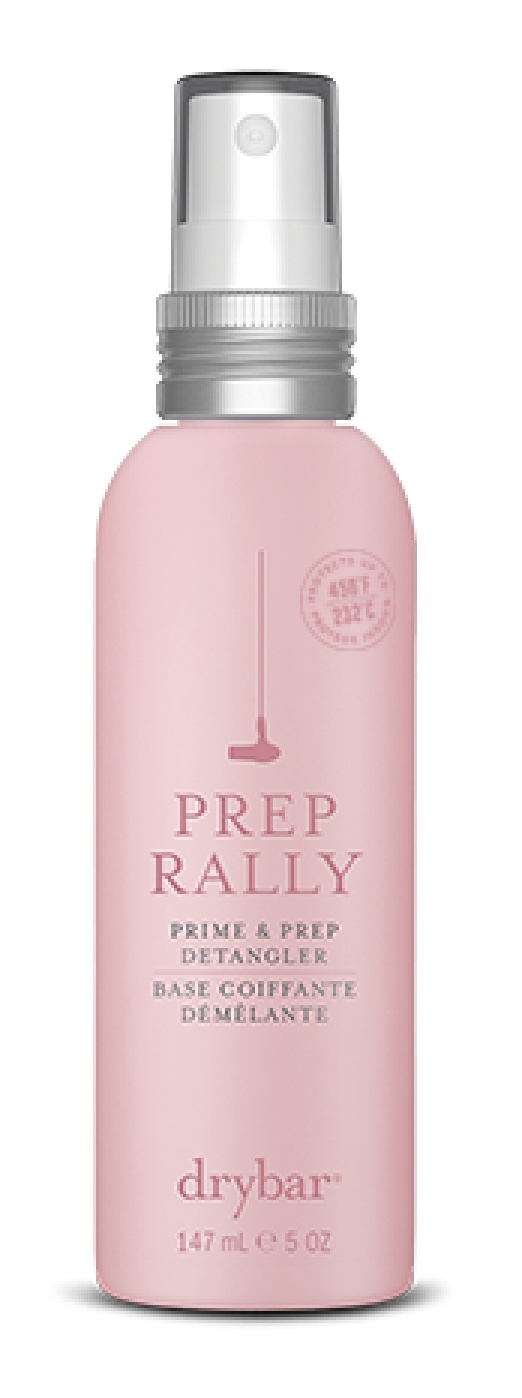
Prep Rally Prime And Prep Detangler
A lightweight detangler that protects hair from rut (up to 450F) and preps hair for optimal performance of styling products.
Uploaded by: adrianazuabi on
Ingredients overview
Aqua (Water, Eau), Propylene Glycol, PPG-26-Buteth-26, Amodimethicone/Morpholinomethyl Silsesquioxane Copolymer, Hippophae Rhamnoides Fruit Oil, Nigella Sativa Seed Oil, Urtica Dioica (Nettle) Leaf Excerpt, Helianthus Annuus (Sunflower) Seed Oil, Biotin, Panthenol, Cetrimonium Chloride (As An Anti-Static Agent, En Tant Qu'Agent Anti-Statique), Menthyl Lactate, Menthol, PEG-40 Hydrogenated Brush Oil, Ethylhexyl Methoxycinnamate, Butyl Methoxydibenzoylmethane, BHT, Disodium EDTA, Trideceth-x, Ascorbic Acid, Acetic Acid, Citric Acid, Polyquaternium-10, Phenoxyethanol, Potassium Sorbate, Parfum (Fragrance), Benzyl Salicylate, Eugenol, Geraniol, Limonene, Linalool
Highlights
Key Ingredients
Other Ingredients
Skim through
| Ingredient name | what-it-does | irr., com. | ID-Rating |
|---|---|---|---|
| Aqua (Water, Eau) | solvent | ||
| Propylene Glycol | moisturizer/humectant, solvent, viscosity controlling | 0, 0 | |
| PPG-26-Buteth-26 | |||
| Amodimethicone/Morpholinomethyl Silsesquioxane Copolymer | |||
| Hippophae Rhamnoides Fruit Oil | antioxidant, emollient | goodie | |
| Nigella Sativa Seed Oil | soothing, antioxidant, emollient, perfuming | goodie | |
| Urtica Dioica (Nettle) Leaf Excerpt | soothing | goodie | |
| Helianthus Annuus (Sunflower) Seed Oil | emollient | 0, 0 | goodie |
| Biotin | |||
| Panthenol | soothing, moisturizer/humectant | 0, 0 | goodie |
| Cetrimonium Chloride (As An Anti-Static Amanuensis, En Tant Qu'Agent Anti-Statique) | antimicrobial/antibacterial, emulsifying, preservative, surfactant/cleansing | ||
| Menthyl Lactate | |||
| Menthol | soothing | icky | |
| PEG-xl Hydrogenated Castor Oil | emulsifying, surfactant/cleansing | ||
| Ethylhexyl Methoxycinnamate | sunscreen | 0, 0 | |
| Butyl Methoxydibenzoylmethane | sunscreen | goodie | |
| BHT | antioxidant, preservative | ||
| Disodium EDTA | chelating | ||
| Trideceth-x | surfactant/cleansing | ||
| Ascorbic Acid | antioxidant, skin brightening, buffering | superstar | |
| Acerb Acid | buffering | ||
| Citric Acid | buffering | ||
| Polyquaternium-10 | viscosity decision-making | ||
| Phenoxyethanol | preservative | ||
| Potassium Sorbate | preservative | ||
| Parfum (Fragrance) | perfuming | icky | |
| Benzyl Salicylate | perfuming | icky | |
| Eugenol | perfuming | icky | |
| Geraniol | perfuming | icky | |
| Limonene | perfuming, solvent | disgusting | |
| Linalool | perfuming | disgusting |
Dry Bar Prep Rally Prime And Prep Detangler
Ingredients explainedAlso-called: Water | What-information technology-does: solvent
Good old water, aka H2O. The nigh mutual skincare ingredient of all. Y'all can usually find information technology right in the very first spot of the ingredient list, meaning it'due south the biggest thing out of all the stuff that makes up the product.
It'southward mainly a solvent for ingredients that exercise not like to dissolve in oils but rather in water.
Once inside the skin, information technology hydrates, but not from the outside - putting pure water on the skin (how-do-you-do long baths!) is drying.
One more thing: the water used in cosmetics is purified and deionized (information technology means that well-nigh all of the mineral ions within it is removed). Like this, the products tin can stay more than stable over fourth dimension.
- It's a helper ingredient that improves the freeze-thaw stability of products
- It's also a solvent, humectant and to some extent a penetration enhancer
- It has a bad reputation among natural cosmetics advocates simply cosmetic scientists and toxicology experts do not agree (read more in the geeky details section)
Read all the geeky details about Propylene Glycol here >>
A helper ingredient that usually comes to the formula coupled with PEG-40 Hydrogenated Castor Oil. The 2 together piece of work as surfactants and oil solubilizers. It's a non-sticky duo that works at low concentration and is often used to solubilize fragrance components into water-based formulas.
 Nosotros don't have clarification for this ingredient nonetheless.
The oil coming from the pulp of the sea buckthorn drupe. It has a pretty unique fatty acid composition: 65% is a combination of the rare Omega-vii, aka palmitoleic acid and the more common palmitic acrid. Fatty acids give the oil nice moisturizing and peel-protecting abilities.
But that'due south non all the goodness of sea buckthorn oil. It contains antioxidant superstar, Vitamin Due east (in multiple forms), antioxidant (and orange color giving) pigments beta-carotene and lycopene, as well as skin-soothing and replenishing beta-sitosterol.
Btw, used undiluted, it volition make your skin orange.
All in all, a goodie emollient plant oil.
The (stock-still or non-volatile) oil coming from the blackness seeds of Nigella Sativa, a smallish (20-30 cm) flowering plant native to Western asia. The seed has a very circuitous chemical composition (it contains both fixed and volatile oil) and is used traditionally for a agglomeration of "anti-something" abilities including antitumor, antidiabetic, antihistaminic, anti-inflammatory, and antimicrobial backdrop. In Islam, blackness cumin seed was considered "a healing seed for all diseases except decease".
As for modernistic research and chemical limerick, the stock-still oil from the seeds is rich in skin-nourishing unsaturated fat acids (mainly linoleic acid at 50 – 60% and oleic acid at 20%, but also contains some rare ones similar C20:two arachidic and eicosadienoic acids), amino acids, vitamins, and minerals. A component called thymoquinone (information technology's the primary component of the volatile oil role, only the stock-still oil also contains some) is considered to requite the seed its main therapeutic properties including strong antioxidant and anti-inflammatory abilities.
As for blackness seed oil and cosmetics, the oil is keen to nourish and moisturize the skin and is highly recommended to treat inflammatory skin diseases similar psoriasis and eczema.
As well-called: Nettle Leaf Extract | What-it-does: soothing
The excerpt coming from the herb stinging nettle. According to manufacturer info, it'due south anti-allergenic and is loaded with several practiced-for-the-pare stuff: it contains firming and toning mineral salts, anti-irritant flavonoids, and astringent and anti-bacterial gallic acid.
It'southward recommended for treatment of oily pare and even stimulation of pilus growth.
Also-chosen: Sunflower Oil | What-information technology-does: emollient | Irritancy: 0 | Comedogenicity: 0
Sunflower does non demand a big intro every bit you probably use it in the kitchen equally cooking oil, or y'all munch on the seeds every bit a good for you snack or yous adore its big, beautiful xanthous flower during the summer - or you do all of these and probably even more. And past even more we mean putting information technology all over your face as sunflower oil is 1 of the nearly commonly used plant oils in skincare.
It's a real oldie: expressed direct from the seeds, the oil is used not for hundreds but thousands of years. Co-ordinate to The National Sunflower Association, there is show that both the plant and its oil were used by American Indians in the expanse of Arizona and New Mexico most 3000 BC. Do the math: it'south more than than 5000 years – definitely an oldie.
Our intro did get pretty big subsequently all (pitiful for that), so let'due south get to the bespeak finally: sunflower oil - similar to other plant oils - is a smashing emollient that makes the skin smooth and nice and helps to keep it hydrated. It also protects the surface of the skin and enhances the damaged or irritated skin barrier. Leslie Bauman notes in Corrective Dermatology that 1 application of sunflower oil significantly speeds up the recovery of the pare barrier within an hour and sustains the results 5 hours afterward using it.
It's as well loaded withfatty acids (by and large linoleic (50-74%) and oleic (14-35%)). The unrefined version (be sure to employ that on your pare!) is especially high in linoleic acid that is great fifty-fifty for acne-decumbent pare. Its comedogen index is 0, meaning that it'south pretty much an all skin-blazon oil.
Truth be told, there are many smashing found oils and sunflower oil is definitely i of them.
Also-chosen: Vitamin H
As well called vitamin H, biotin is the principal component of many enzymes in our torso. A nice ingredient to take as a supplement for stronger nails and hair. When you do not have it as a supplement its effects are a chip more questionable just co-ordinate to manufacturer info information technology cansmooth the skin and strengthen the hair.
An easy-to-formulate, commonly used, dainty to take ingredient that's also called pro-vitamin B5. Equally yous might guess from the "pro" office, it'south a forerunner to vitamin B5 (whose fancy name is pantothenic acrid).
Its primary job in skincare products is to moisturise the peel. It's a humectant pregnant that it can help the skin to attract h2o and then hold onto information technology. At that place is also research showing that panthenol can assist our pare to produce more lovely lipids that are important for a strong and healthy skin barrier.
Another peachy affair nearly panthenol is that it has anti-inflammatory and pare protecting abilities. A report shows that it can reduce the irritation caused by less-nice other ingredients (e.k. fragrance, preservatives or chemical sunscreens) in the product.
Research also shows that it might exist useful for wound healing as it promotes fibroblast (dainty blazon of cells in our skin that produce peel-firming collagen) proliferation.
If that wasn't enough panthenol is as well useful in nail and hair intendance products. A study shows that a blast treatment liquide with two% panthenol could finer get into the blast and significantly increase the hydration of it.
Equally for the hair the hydration event is also true there. Panthenol might brand your hair softer, more elastic and helps to rummage your hair more easily.
We don't have clarification for this ingredient all the same.
We don't take description for this ingredient nevertheless.
Menthol needs no introduction: it's the thing that causes the cooling sensation so well-known both from cosmetic products also every bit a bunch of other things like chocolate, chewing mucilage, toothpaste or cigarette. It'due south a natural compound that comes from the essential oil of Mentha species (peppermint oil contains 40-50% menthol) and it gives them their typical minty smell and season.
As for skincare, menthol seems to be a mixed bag. Apart from the cool cooling awareness (that might last upward to seventy mins!), information technology also has painkilling, crawling reducing, antibacterial, antifungal and even penetration enhancing properties. On the other hand, information technology also seems to human activity equally a peel irritant that increases trans-epidermal water loss (the h2o that evaporates from the outer layer of the pare) and thus contributes to drying out the skin.
A mildly gummy, amber-colored liquid with fatty odor, made from Brush Oil and polyethylene glycol (PEG).
If it were a person, we'd say, it's agile, diligent & multifunctional. It's mostly used as an emulsifier and surfactant only nearly often it is used to solubilize fragrances into h2o-based formulas.
Also-called: Octinoxate, Octyl Methoxycinnamate | What-information technology-does: sunscreen | Irritancy: 0 | Comedogenicity: 0
A articulate, oil-soluble, "cosmetically-elegant" liquid that is the nearly commonly usedchemic sunscreen. It absorbs UVB radiation (at wavelengths: 280-320 nm) with a tiptop protection at 310nm.
It only protects against UVB and non UVA rays (the 320-400 nm range) – so always choose products that incorporate other sunscreens also. It isnot very stable either, when exposed to sunlight, information technology kind of breaks downward and loses its effectiveness (non instantly, only over time - information technology loses x% of its SPF protection ability inside 35 mins). To brand information technology more stable it tin be - and should be - combined with other sunscreen agents to give stable and broad-spectrum protection (the new generation sunscreen agent, Tinosorb S is a particularly skilful one for that).
Regarding safety, there are besides some concerns around Octinoxate. In vitro (made in the lab not on real people) and animal studies have shown that it may produce hormonal (estrogen-like) effects.Practice not panic, the studies were not conducted under real life conditions on existent man people, and so it is probably over-cautious to avert Octinoxate birthday. However, if you lot are significant or a small child (under 2 yrs. old), choose a physical (zinc oxide/titanium dioxide) or new-generation Tinosorb based sunscreen, only to be on the super-safe side. :)
Overall, Ethylhexyl Methoxycinnamate is an old-schoolhouse chemical sunscreen agent. In that location are plenty of better options for sun protection today, but it is considered "safe every bit used" (and sunscreens are pretty well regulated) and it is available worldwide (tin be used upwardly to x% in the EU and upwardly to 7.five% in the Usa).
Also-called: Avobenzone | What-it-does: sunscreen
The famous Avobenzone. Information technology is a special snowflake every bit it isthe just globally available chemical sunscreen agent that provides proper UVA protection (in the Usa, new generation sunscreen agents are not canonical because of impossible FDA regulations). It is the global gold standard of UVA protection and is the virtually used UVA sunscreen in the world.
It gives very good protection across the whole UVA range (310-400 nm that is both UVA1 and UVA2) with a peak protection at 360 nm. The problem with it, though, is that it isnot photostable and degrades in the sunlight. Wikipedia says that avobenzone loses 36% of its UV-absorption capacity later on just one hour of sunlight (yep, this is one of the reasons why sunscreens have to be reapplied later a few hours).
The corrective's industry is trying to solve the problem by combining avobenzone with other UV filters that enhance its stability (similar octocrylene, Tinosorb Southward or Ensulizole) or past encapsulating it and while both solutions help, neither is perfect. Interestingly, the combination of avobenzone with mineral sunscreens (that is titanium dioxide and zinc oxide) is not a skilful idea. In the United states, it is flat out prohibited as avobenzone becomes unstable when combined with mineral sunscreens.
As for safety, avobenzone has a pretty expert safety profile. It counts equally not-irritating, and unlike another chemical sunscreens, it shows no estrogenic consequence. The maximum concentration of avobenzone permitted is 5% in the Eu and 3% in the U.s.a..
It'southward the acronym for Butylated Hydroxy Toluene. It's a common synthetic antioxidant that's used as a preservative.
There is some controversy around BHT. Information technology's non a new ingredient, it has been used both as a food and cosmetics additive since the 1970s. Plenty of studies tried to examine if it's a carcinogen or not. This Truth in Aging article details the situation and also writes that all these studies examine BHT when taken orally.
As for cosmetics, the CIR (Cosmetic Ingredient Review) concluded that the amount of BHT used in cosmetic products is low (usually effectually 0.01-0.1%), it does not penetrate skin far enough to be captivated into the bloodstream and it is safe to apply in cosmetics.
Super common little helper ingredient thathelps products to remain overnice and stable for a longer time. It does and then by neutralizing the metal ions in the formula (that usually go into there from water) that would otherwise cause some not so overnice changes.
Information technology is typically used in tiny amounts, around 0.ane% or less.
We don't have description for this ingredient yet.
- Works best between a concentration of v-xx%
- Boosts the skin's own collagen production
- Fades pigmentation and chocolate-brown spots
- If used nether sunscreen information technology boosts its UV protection
- Extremely unstable and oxidizes very hands in presence of lite or air
- Stable in solutions with h2o only if pH is less than 3.5 or in waterless formulations
- Vit Eastward + C work in synergy and provide superb photoprotection
- Ferulic acrid doubles the photoprotection consequence of Vit C+Eastward and helps to stabilize Vit C
- Strong Vit. C serums might crusade a slight tingling on sensitive skin
Read all the geeky details virtually Ascorbic Acid here >>
The acid found in vinegar. Can be a pare irritant and drying in larger amounts only in tiny amounts, information technology's used to ready the pH of the corrective formula. Has besides some disinfecting properties.
Citric acrid comes from citrus fruits and is an AHA. If these magic three letters don't tell you anything, click hither and read our detailed description on glycolic acid, the nearly famous AHA.
So citric acid is an exfoliant, that can - just like other AHAs - gently elevator off the expressionless skin cells of your pare and make information technology more smooth and fresh.
At that place is likewise some inquiry showing that citric acrid with regular use (think three months and 20% concentration) can help lord's day-damaged skin, increase peel thickness and some nice hydrating things called glycosaminoglycans in the skin.
But according to a comparative written report done in 1995, citric acrid has less skin improving magic backdrop than glycolic or lactic acid. Probably that's why citric acrid is usually not used as an exfoliant but more as a helper ingredient in pocket-sized amounts to adjust the pH of a formulation.
A cellulose derived polymer (a big molecule that consists of many parts) that can assistance to thicken up products, form a dainty moving-picture show on the skin or hair and is considered to be an first-class hair conditioner.
It's pretty much the current IT-preservative. It'due south safe and gentle, but even more than importantly, it'southward not a feared-by-everyone-mostly-without-scientific-reason paraben.
It's non something new: it was introduced around 1950 and today it can be used upward to one% worldwide. It can exist found in nature - in greenish tea - simply the version used in cosmetics is synthetic.
Other than having a good rubber profile and being quite gentle to the skin it has some other advantages too. Information technology can be used in many types of formulations as it has nifty thermal stability (tin exist heated up to 85°C) and works on a wide range of pH levels (ph iii-x).
It's frequently used together with ethylhexylglycerin as it nicely improves the preservative activity of phenoxyethanol.
Information technology's ane of those things that assistance your cosmetics non to get incorrect besides before long, aka a preservative. It's not a strong one and doesn't really work against leaner, but more against mold and yeast. To exercise that it has to pause down to its agile form, sorbic acid. For that to happen, there has to be water in the production and the right pH value (pH iii-four).
But even if everything is right, information technology's not enough on its own. If you come across potassium sorbate you lot should run into some other preservative next to it too.
BTW, it's too a nutrient preservative and even has an E number, E202.
Also-called: Fragrance, Parfum;Parfum/Fragrance | What-it-does: perfuming
Exactly what information technology sounds: overnice smelling stuff put into cosmetic products then that the stop product also smells nice. Fragrance in the The states and parfum in the EU is a generic term on the ingredient list that is made upwardly of thirty to fifty chemicals on average (but it tin can have as much as 200 components!).
If y'all are someone who likes to know what you put on your face then fragrance is not your best friend - in that location'southward no way to know what'due south really in it.
Also, if your skin is sensitive, fragrance is again not your best friend. It's the number one cause of contact allergy to cosmetics. It's definitely a smart thing to avoid with sensitive pare (and fragrance of any blazon - natural is simply every bit allergic as constructed, if not worse!).
It'southward a common fragrance ingredient that has a light floral odour. It's ane of the "EU 26 fragrances" that has to be labelled separately (and cannot be simply included in the term "fragrance/perfume" on the label) because of allergen potential. Best to avoid if your skin is sensitive.
A colorless or yellowish oil that's used as a fragrance. It has aspicy smell and can be found for example in basil, clove or cinnamon oil.
A 2006 in-vitro (made in the lab not on real people) study examined if clove oil is cytotoxic and found that non merely clove oil but likewise its primary elective, eugenol is cytotoxic fifty-fifty at very depression concentration (0.03%). It's also one of the "EU 26 fragrances" that has to be labelled separately (and cannot be simply included in the term "fragrance/perfume" on the characterization) because of allergen potential. Best to avoid at least in leave-on products.
Geraniol is a common fragrance ingredient. It smells like rose and can be constitute in rose oil or in modest quantities in geranium, lemon and many other essential oils.
Simply like other similar fragrance ingredients (similar linalool and limonene) geraniol also oxidises on air exposure and becomes allergenic. Best to avoid if yous have sensitive peel.
A supercommon and cheap fragrance ingredient. It's in many plants, e.thousand. rosemary, eucalyptus, lavander, lemongrass, peppermint and it's the main component (well-nigh 50-xc%) of the peel oil of citrus fruits.
It does smell nice but the trouble is that information technology oxidizes on air exposure and the resulting stuff is non good for the pare. Oxidized limonene can crusade allergic contact dermatitis and counts equally a frequent pare sensitizer.
Limonene's nr1 function is definitely being a fragrance component, but there are several studies showing that information technology's also a penetration enhancer, mainly for oil-loving components.
All in all, limonene has some pros and cons, but - especially if your skin is sensitive - the cons probably outweigh the pros.
Linalool is a super common fragrance ingredient. It's kind of everywhere - both in plants and in corrective products. Information technology's part of 200 natural oils including lavender, ylang-ylang, bergamot, jasmine, geranium and it tin be found in xc-95% of prestige perfumes on the marketplace.
The trouble with linalool is, that merely like limonene it oxidises on air exposure and becomes allergenic. That'due south why a product containing linalool that has been opened for several months is more likely to be allergenic than a fresh ane.
A study made in the United kingdom of great britain and northern ireland with 483 people tested the allergic reaction to 3% oxidised linalool and 2.3% had positive test results.
You may also want to take a look at...
Normal (well kind of - it'southward purified and deionized) water. Usually the chief solvent in cosmetic products. [more than] A mutual glycol that improves the freeze-thaw stability of products. It'south besides a solvent, humectant and to some extent a penetration enhancer. [more] A helper ingredient that normally comes to the formula coupled with PEG-twoscore Hydrogenated Castor Oil. The two together work as surfactants and oil solubilizers. [more than] Bounding main buckthorn berry oil - contains rare omega-7 fatty acid, antioxidants, and skin-soothing plant sterols. A overnice moisturising and skin protecting oil. [more] Black Seed/Balck Cumin Oil - a skin-nourishing oil (50 – 60% linoleic acid, xx% oleic acrid) with anti-inflammatory, antioxidant and antimicrobial backdrop. Information technology's specially great to treat inflammatory skin diseases like psoriasis and eczema. [more] Sunflower Oil - it's a great emollient that protects & enhances the peel barrier. [more] Vitamin H is a slap-up supplement for stronger nails and hair. Every bit a skincare ingredient, it'due south a bit more questionable, just it might polish the skin and strengthen the pilus. [more] Pro-Vitamin B5 is a goodie that moisturises the pare, has anti-inflammatory, skin protecting and wound healing properties. [more] Menthol needs no introduction: it's the thing that causes the cooling sensation then well-known both from cosmetic products also as a bunch of other things like chocolate, chewing gum, toothpaste or cigarette. It'due south a natural compound that comes from the essential oil of Mentha species (peppermint oil contains 40-50% menthol) and it gives them their typical minty smell a [more] A mildly gummy, bister-colored liquid that works equally an emulsifier and surfactant. [more than] Octinoxate - an old-school chemical sunscreen that absorbs UVB radiation (wavelengths: 280-320 nm). Non photostable and does not protect against UVA. [more] Avobenzone - the only globally available chemical sunscreen that gives proper UVA protection. Information technology is non photostable so has to exist combined with ingredients that aid to stabilize information technology. [more than] It's the acronym for Butylated Hydroxy Toluene. It'due south a common synthetic antioxidant that'south used as a preservative.At that place is some controversy around BHT. [more] Super common little helper ingredient that helps products to remain nice and stable for a longer time. It does so by neutralizing the metal ions in the formula (that usually get into at that place from water) that would otherwise cause some not so nice changes. [more than] Pure Vitamin C. A skincare superstar that is clinically proven to boost collagen production (in 5-xx% concentration), fade hyperpigmentation and heave UV protection under sunscreen. Also, it's extremely unstable and hard to formulate. [more] The acrid found in vinegar. Can be a skin irritant and drying in larger amounts but in tiny amounts, information technology's used to set the pH of the corrective formula. Has as well some disinfecting backdrop. An AHA that comes from citrus fruits. It is normally used as a helper ingredient to adjust the pH of the formula. [more] A cellulose derived polymer that tin can help to thicken up products, grade a nice film on the skin or hair and is considered to be an excellent hair conditioner. Pretty much the current IT-preservative. It's safe and gentle, and tin be used up to 1% worldwide. [more] A non so strong preservative that doesn't really work against bacteria, just more against mold and yeast. [more than] The generic term for nice smelling stuff put into cosmetic products so that the end product also smells dainty. It is made up of 30 to 50 chemicals on average. [more] It's a common fragrance ingredient that has a light floral olfactory property. It'southward ane of the "EU 26 fragrances" that has to be labelled separately (and cannot be but included in the term "fragrance/perfume" [more] A colorless or yellowish oil that'southward used as a fragrance with a spicy olfactory property. [more] A common fragrance ingredient that smells like rose and can be found in rose oil. [more] A super common fragrance ingredient found naturally in many plants including citrus peel oils, rosemary or lavender. It autoxidizes on air exposure and counts as a mutual pare sensitizer. [more] A super common fragrance ingredient that can be found amongst others in lavender, ylang-ylang, bergamot or jasmine. The downside of it is that it oxidises on air exposure and might become allergenic. [more]
Source: https://incidecoder.com/products/dry-bar-prep-rally-prime-and-prep-detangler
0 Response to "Drybar Prep Rally Prime & Prep Detangler Review"
Post a Comment